
Evolution of AI tooling
24 month evolution of AI tooling for Product Designers
Replit versus Figma Make
I encouraged my designer to really push the boundaries and experiment.
Setting a broad brief with a wide expectation for output helped to generate a safe space for failure, trial and error and much wider thinking.
This particular designer is on a steep growing career path, offering this opportunity to him I’m hoping will increase his visibility and allow him to understand the wider picture of the business and to take ownership of outputs.
For Figma Make the UI was good and it largely understood the interaction patterns that were needed but the code was poor and there was a lack of a data-base to take this concept any further
My designer had taken the initiative to take the brief even further. Showing that an output with both good UI and decent code was possible.
He took the build from Figma Make and then used that as a starting point in Replit which could create a far more stable backend.
At this point I was blown away.
Tears of joy 😭
“Smashed it! Really coherent comparison of Replit vs Figma Make”
Comparison exercises
Late 2025 I collaborated with the Director of Gen AI to write a brief. A brief with broad enough scope to allow a designer to find multiple solutions.
This brief was then given to a Mid-weight Product Designer along with 2 days scope to test the value of output gained from Replit and Figma Make.
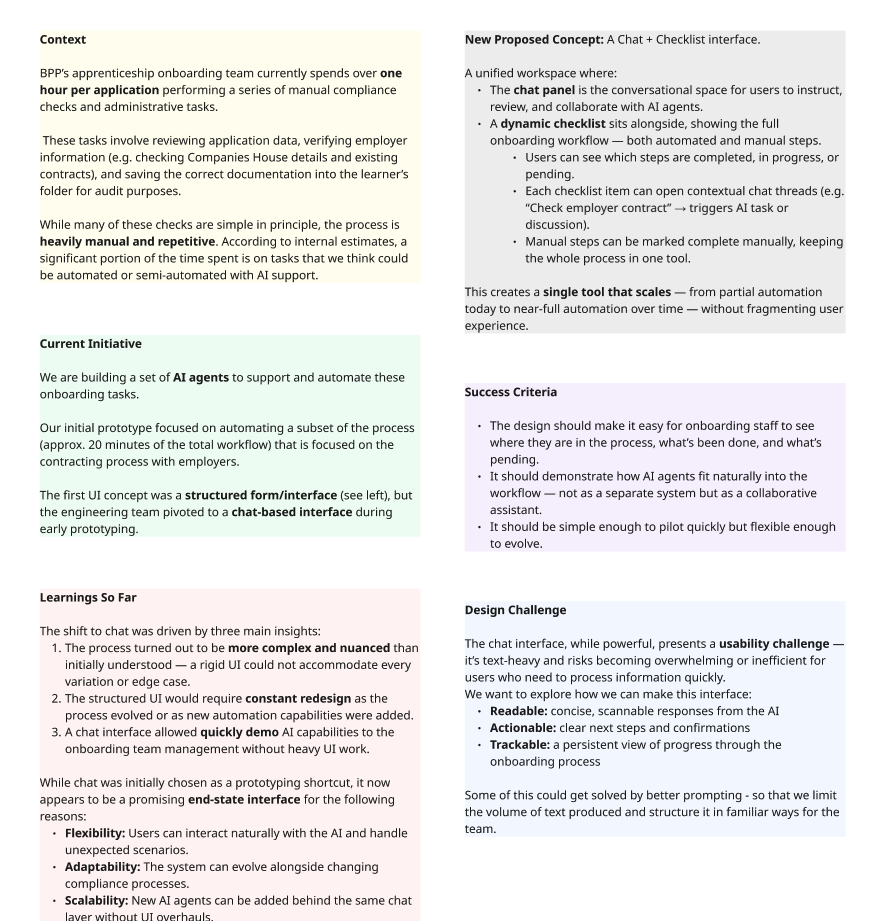
The brief
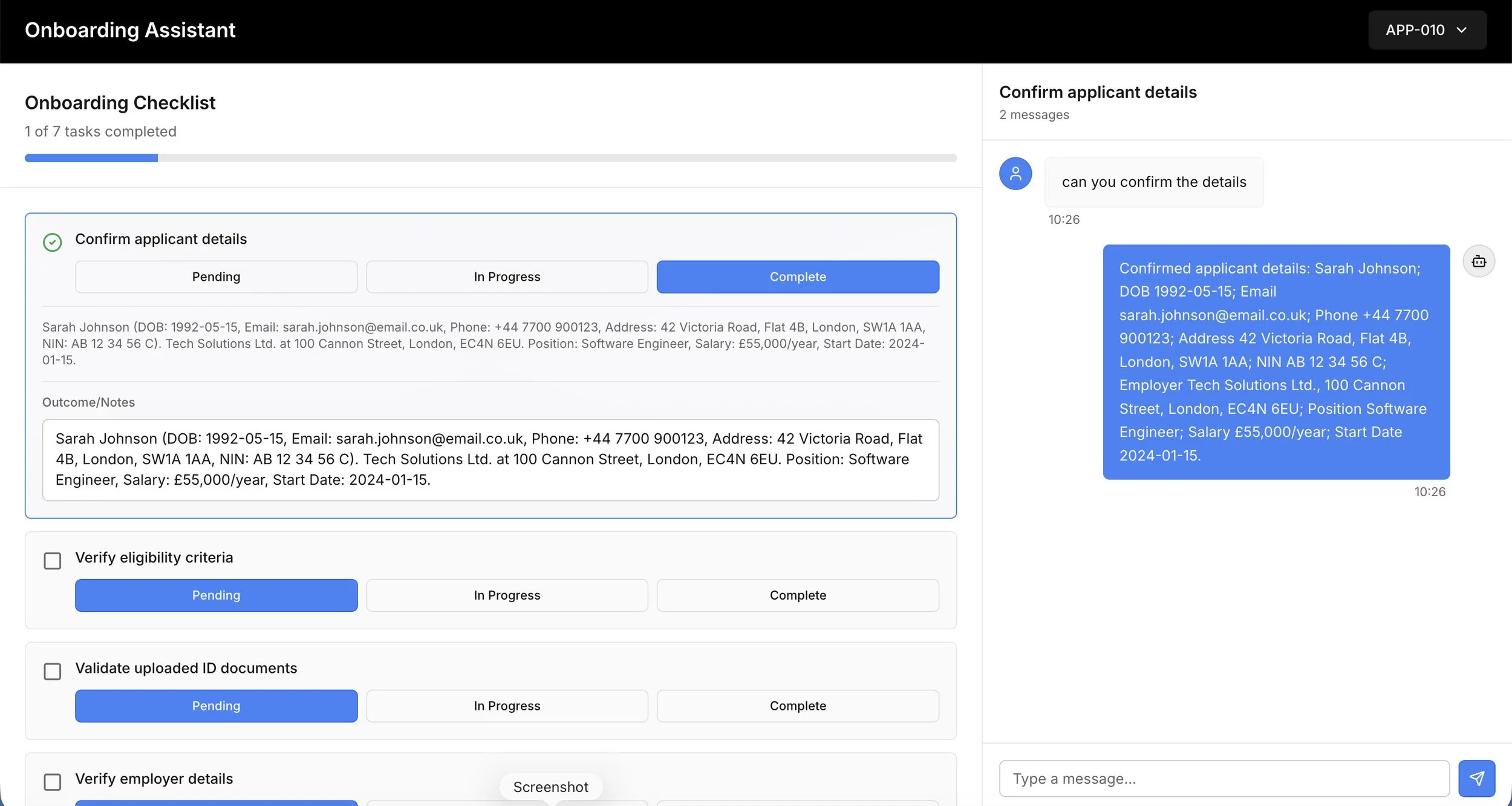
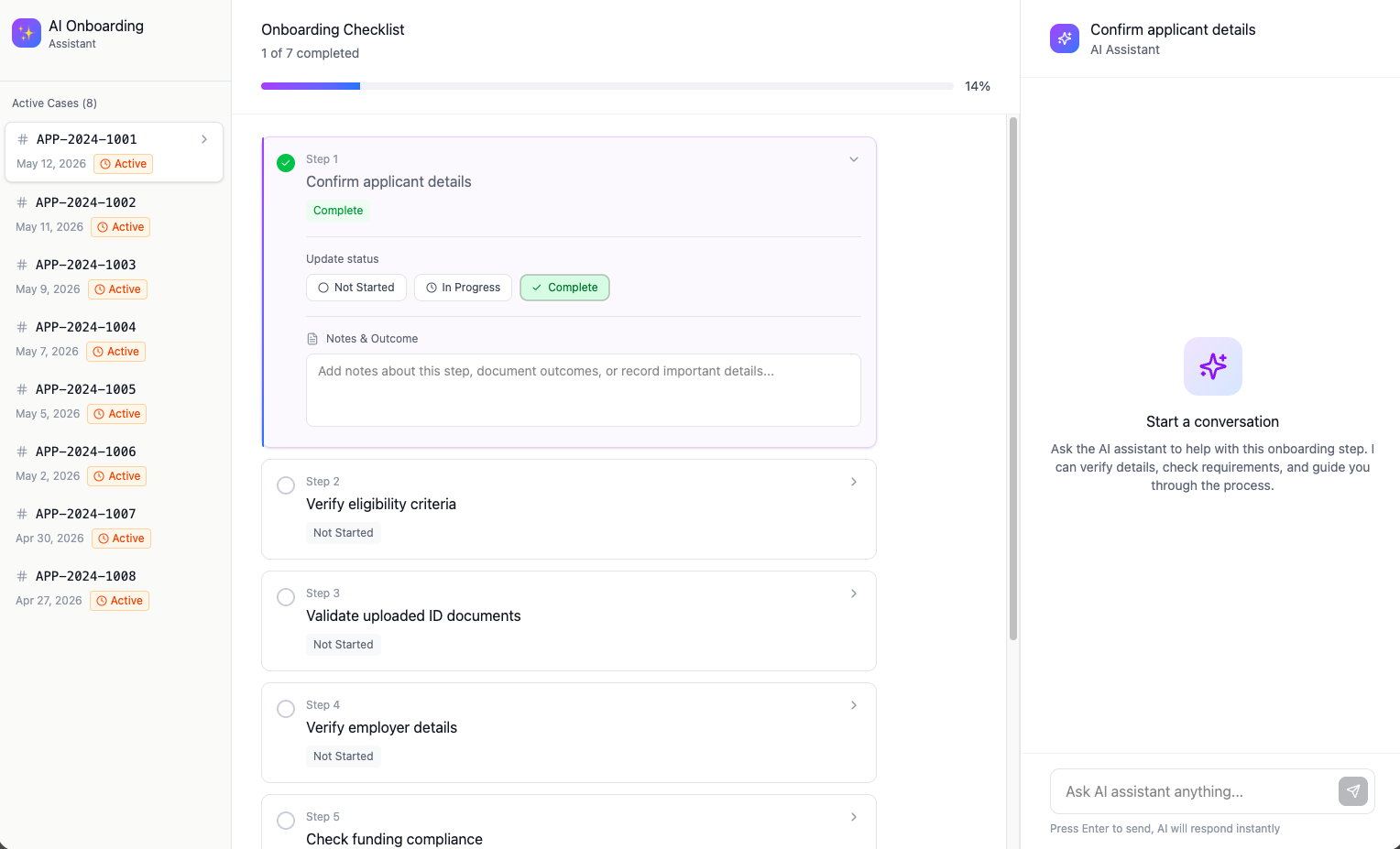
Replit quickly understood the flow of data and how to manage this multi-stage process but clearly it lacked the ability to make this interface feel intuitive for a user. We were missing interaction states and a clear sense of hierarchy.
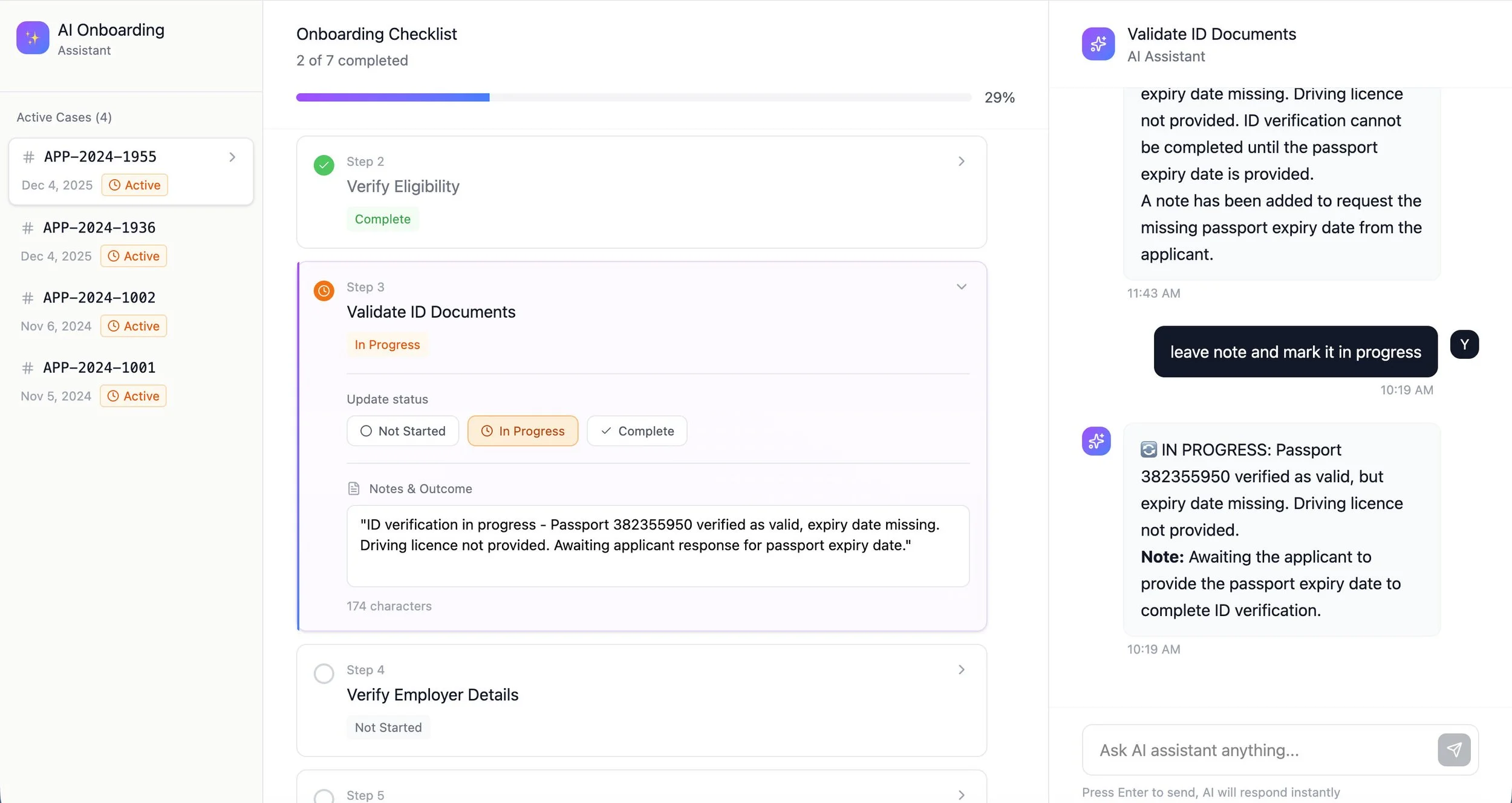
“I’m taking inspiration from you Prabin to trial combining multiple AI technologies. What a super power.”
“I’m taking inspiration from you Prabin to trial combining multiple AI technologies. What a super power.”
This opportunity to encourage a mid-weight designer to push the boundaries of the design process has helped to reduce skepticism of AI tools from other designers and given the mid-weight further opportunities to expand his soft skills, giving him greater growth.
now the shift to AI first workflows
This shift starts with understanding the possibilities of the AI tools we have at our disposal.
There were two key projects in the last 6 months that have lent themselves well showcasing the benefit of AI tools in the Product Designer workflow. Although not at the beginning of the process.
AI prompted prototypes
Prototyping straight from Figma Make, Replit or Claude has significantly shifted the speed and quality of our user testing research.
We now have the ability to create fully working examples of experiences in a matter of hours. Previously some prototypes could take up to a week to produce.
And with our components, styles and variables all connected we can be sure that we are testing is producible by Engineering.
Initially our prototypes had started from fully fledged Figma Designs but now we’re understanding how we can take PRD’s and prompt straight into Claude. This doesn’t erase the need for Figma Design but allows Product Designers and the 3 amigos in squads to realise value, effort and direction quicker than ever before.